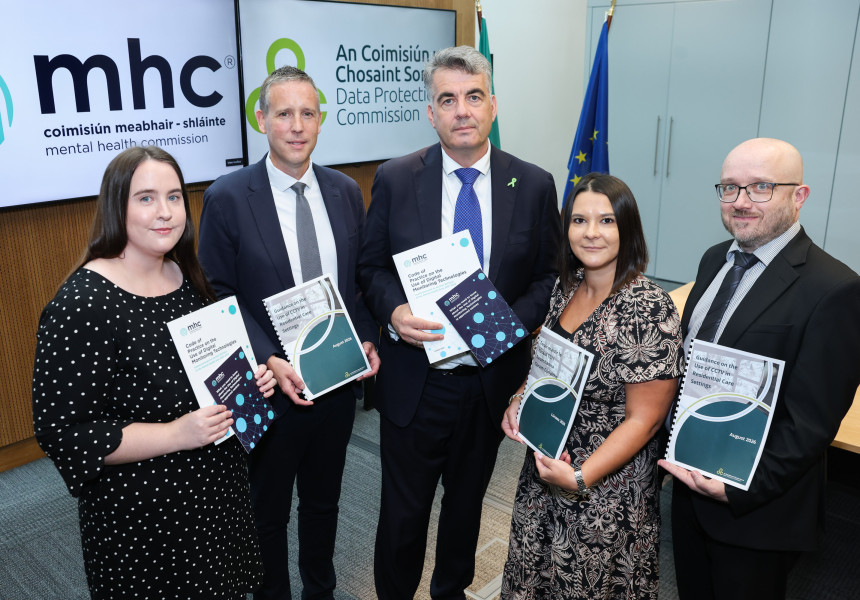
The Mental Health Commission found 20 non-compliances in three in-patient units.
The Mental Health Commission has this morning published inspection reports for three approved centres in Westmeath, Galway, and Cork which have identified one critical, eight high-risk, eight moderate-risk and three low risk ratings for non-compliance on legal regulations.
The critical risk identified related to individual care planning and the high-risk ratings identified covered the areas of staffing, use of seclusion, identification of resident’s medication, consent to treatment, maintenance of records, risk management procedures and premises. In the instance of individual care planning, two of the nine care plans did not identify appropriate goals for the resident, two of the nine care plans did not identify the care and treatment required to meet the goals identified, with no therapies listed or input from relevant multidisciplinary team members. Two care plans did not identify the resources required to provide the care and treatment identified and one resident didn’t have an ICP for a week.
The Inspector of Mental Health Services, Dr Susan Finnerty, spoke about the importance of individual care planning and noted that this was an area nationally that many approved centres must address.
“A care plan describes the care, treatment, and interventions that a person should receive, to ensure that they get the right care at the right time. Everyone using mental health services has the right to a care plan that is personal to them. Nationally individual care planning in our mental health service needs improvement. It is essential that we move towards a mental health service which provides every individual with a meaningful care plan”
Dr Finnerty, said it was disheartening to see the decrease in compliance in all the centres with regulations.
“We know that these centres had achieved high overall compliance rates in 2021. One centre decreased its compliance by 15%, one by 11% and one by 9%. Our regulatory team have worked with these approved centres over the past number of months putting corrective and preventative action plans in place so non-compliances can be addressed and conditions for residents improved”
St Loman’s Hospital is located in Co Westmeath, is registered for 41 beds and has two distinct units, the Admissions unit and St. Edna’s ward. St. Edna's ward provides continuing care for male residents with enduring mental health issues. Sleeping accommodation consisted of single en suite bedrooms. The Admissions unit is an acute facility that provides treatment for male and female residents. At the time of the inspection this unit had reduced bed capacity from 24 to 21 beds to facilitate COVID-19 social distancing and isolation measures. There were 28 residents, 16 of whom had resided in the approved centre for over six months, at the time of the inspection
There were three conditions attached to the registration of this approved centre at the time of inspection. Two conditions related to the regulations on premises; the centre shall provide an update on the implementation related to ligature minimisation and the centre shall implement a programme of maintenance to ensure the premises are safe and meet the needs of the resident group. The third condition related to the regulation on staffing to ensure all healthcare professionals working in the centre are up to date in mandatory training areas. The centre was not in breach of any condition but was non-compliant with all three regulations.
Overall, compliance fell from 86% in 2021 to 75% in 2022. The centre received nine non compliances with the regulations; four high risk, four moderate and one low. The centre was high risk non-compliant for regulations relating to identification of resident’s medication, staffing, use of seclusion and consent to treatment.
In relation to the regulation identification of resident’s medication, arrangements need to be in place to ensure that each resident is readily identifiable by staff when receiving medication, health care or other services. In one record medication administered to a resident was not recorded, and the clinical file did not contain a documented explanation for this. Not all entries on the medical records were legible, the name and date of birth was illegible on every single page. As an immediate corrective action an emergency review was carried out on the day of inspection by the area director of nursing to ensure all records were legible and identifiable with two or more unique identifiers
The centre received a high-risk noncompliance with the rule on seclusion because the episode of seclusion of one resident was not in rare and exceptional circumstances, and it was not in the best interests of the resident. As a corrective action the MHC has requested a restrictive practice audit monthly
Therapeutic activities were found to be appropriate to the needs of residents, with each receiving a multi-disciplinary care plan which was developed and reviewed with their own input. Facilities and processes were found to mostly respect residents’ privacy and dignity. Completed risk assessments showed an overall low level of risk in the hospital. Staff numbers and skill levels were deemed sufficient to meet resident needs.
Residents had found being confined to their suite during Covid-19 outbreaks difficult but praised the staff in how this was managed. All residents interviewed knew who their care team were, with many stating that they see their doctor and the team two or three times a week.
The Child and Adolescent Mental Health Service (CAMHS) approved centre is located within the campus of Merlin Park University Hospital in Galway. It is a purpose-built inpatient facility. The centre is comprised of two individual units: Woodsend and The Willows. The centre is registered for 20 beds. Bed capacity was reduced to 17 at the time of inspection due to the risk of COVID-19, social distancing, and isolation measures. At the time of inspection there were 9 residents.
The centre’s compliance rate has decreased from 97% in 2021 to 88% in 2022. There was one condition attached to the registration at the time of inspection which related to the regulation on the use of seclusion where the centre shall develop a plan to replace the current seclusion facilities. The centre was not in breach of the condition and was non-compliant with the regulation on premises.
In terms of non-compliance, it was found that:
- Not all staff disciplines had completed mandatory training in Fire Safety and the Management of violence and aggression.
- Ligature points were not minimised to the lowest practicable level. Ligatures anchor points were found throughout the parents flat where visits had been taking place. Visits in the parents flat ceased during the inspection due to the identified risk. Visits were moved to the gym and garden areas.
- The centre was not in a good state of repair externally and internally on inspection. Plaster cracks in the gym, stained paintwork, and three curtains were found to have paint stains.
- The flooring of the seclusion room had a hard surface.
- Residents in seclusion did not have access to adequate toilet and washing facilities, as there was no shower facility in the seclusion area.
In a feedback questionnaire the five residents said that they understood their individual care plans, and seven residents said they were only ‘sometimes’ involved in setting goals for their individual care plans.
The young people also mentioned not having enough activities on the weekends. Feedback suggested that some found it daunting attending their multi-disciplinary team meetings. Most said they felt safe in the centre and most said they knew who their key worker was.
The Youth Advocate Programme provided an advocacy service within the centre. The YAP advocate visited the young people in the approved centre weekly and provided feedback to the inspection team. Feedback from the advocate suggested that the young people would like to be provided with support when attending their weekly multi-disciplinary meeting and with discharge planning.
The Acute Mental Health Unit in Cork University Hospital is a 50 bed two storey building located on the campus of Cork University Hospital (CUH). There were 35 residents present in the centre at the time of the inspection.
There was one condition attached to the registration of this approved centre at the time of inspection. The centre must submit a costed, funded and timebound governance plan to comprehensively address continuous areas of non-compliance with the Mental Health Act 2001. The centre was not in breach of the condition.
The compliance rating dropped from a high of 94% in 2021 to 79% in 2022, and the inspection team found that the approved centre did not always provide safe practices which reduced risk of harm to the residents:
- The centre had not complied with a national directive in relation to the identification and removal of a specific ligature risk. These specific ligatures were removed by staff during the inspection.
- Other ligature points were observed
- Not all healthcare staff had completed mandatory training in basic life support, fire safety, the management of violence and aggression and children’s first, nor had they completed training in the Mental Health Act 2001.
- the centre did not ensure that all residents had a comprehensive individual care plan.
In relation to the regulation on premises the inspectors found:
- Two fire doors were damaged and had been temporarily repaired. It was estimated that the doors were to be replaced in two weeks after the inspection.
- Peeling paint was observed on the external walls in all gardens, as well as in some areas within the centre. The garden in the male wing was untidy, with litter visible in shrubs. All gardens had weed growth and dead flowers in the flower beds.
However, residents interviewed overall had positive comments to make. Some residents said they felt visiting restrictions due to COVID-19 were difficult, but that staff made great efforts to facilitate activities indoors and outdoors. The inspectors received a report from the Peer Advocacy in Mental Health representative. The report from the advocate stated that nursing staff were complimented as to how they treated the residents and how caring they were and the positive aspects of having individual bedroom ensuite accommodation.
You can find our full statement here.
St Loman's Hospital Inspection Report
Child and Adolescent Mental Health Service Merlin Park Inspection Report
Acute Mental Health Unit Cork University Hospital Inspection Report